
You are reading a WovelAI editorial — designed to make complex ideas, technology and developments easier to understand.
The Ghost Truck Epidemic
Picture an eighteen-wheeler barreling down a desolate stretch of interstate at three in the morning. Diesel is burning, rubber is wearing thin against asphalt, and the driver is gripping the wheel through the eighth hour of a grueling shift. Now, look inside the cargo bay. It’s entirely empty.
It sounds like an expensive ghost story, but it is the baseline reality of modern global commerce. Roughly twenty percent of all heavy-duty truck miles driven globally are completely empty. They are ghost miles. They haul air, burn fossil fuels for pure vanity, and contribute heavily to a logistical footprint that makes environmental scientists wake up in a cold sweat.
We obsess over the tailpipe, but the real enemy is the routing table. For decades, matching freight with available truck capacity has been an exercise in analog guesswork, frantic phone calls, and desperate whiteboard scribbling. But as computational logistics enters the fray, a radical new doctrine is taking shape: the greenest mile is simply the one you never run.
The Math Behind the Movement
Logistics has always been a game of massive scale and razor-thin margins. Move a pallet three inches to the left, save a tenth of a cent; scale that across ten million shipments, and you’ve bought yourself a corporate jet. But the environmental cost hasn’t historically shown up on the balance sheet.
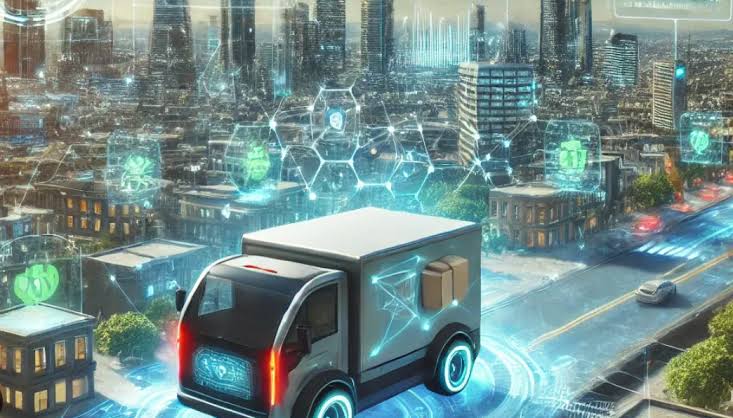
Enter artificial intelligence—not as a magic wand, but as a relentless optimizer. Traditional route-planning software operates like a rigid rail timetable. It looks at point A, point B, and the shortest line between them. Modern predictive models, however, eat variables for breakfast. Weather patterns, sudden port congestion, driver hours-of-service regulations, historical traffic spikes, and real-time fuel pricing are ingested simultaneously to generate dynamic networks.
Consider what happens when algorithms begin predicting demand before the customer even clicks ‘buy’. Warehouses shift inventory proactively. Regional fulfillment nodes absorb shocks before they ripple down the supply chain. Trucks don’t just find a load for the return trip; they are dynamically routed into collaborative networks where competitor fleets share capacity to eliminate redundancy.
Old-School Routing vs. Predictive Networks
How do legacy systems stack up against modern computational logistics? The differences go far beyond simple fuel savings.
| Metric | Legacy Logistics Software | AI-Powered Predictive Networks |
|---|---|---|
| Route Adaptation | Static, planned days in advance. Reactive to delays. | Dynamic, real-time re-routing based on live telemetry and weather. |
| Empty Mile Reduction | Minimal; depends on manual broker matching. | High; automated multi-shipper load pooling and backhaul matching. |
| Carbon Accounting | Estimated averages based on distance and fuel burn models. | Granular, shipment-level tracking tied to actual engine telemetry. |
| Human Burden | High cognitive load; constant phone calls and manual overrides. | Management by exception; algorithms handle routine adjustments. |
What This Means For You
You might not own a fleet of freight liners, but this silent computational shift impacts your daily life in profound ways. When supply chains tighten, consumer goods grow expensive. When trucks burn excess fuel, carbon taxes and shipping surcharges quietly inflate the price of everything from your morning coffee to your next smartphone upgrade.
If you are a consumer, it means faster, more reliable deliveries with a rapidly shrinking environmental guilt factor. If you work in supply chain management, operations, or retail, it means your career is pivoting away from spreadsheet babysitting and toward algorithmic oversight. The professional skill set is shifting from knowing how to negotiate a spot rate to understanding how to audit and trust an automated routing system.
The Limits of the Algorithm
We shouldn’t pretend that math can solve every physical friction point in the universe. Algorithms can predict traffic, but they cannot stop a bridge from collapsing or a blizzard from shutting down a mountain pass. Furthermore, data silos remain a massive bottleneck. Proprietary freight networks hate sharing information. Competitors are often deeply reluctant to pool shipping data, fearing it exposes trade secrets or pricing models.
There is also the human element. Truck drivers are the backbone of the global economy, yet they are routinely squeezed by unpredictable schedules and relentless optimization pressures. If AI-driven routing treats drivers like chess pieces rather than human beings, the resulting turnover will cause systemic collapse faster than any mechanical failure.
Bottom line
The greenest mile is an elegant philosophy, but it requires a brutal reckoning with how we build and manage physical networks. By squeezing the air out of supply chains through intelligent forecasting and collaborative routing, we can slash emissions without waiting for the entire global fleet to turn electric. The tools are here. The imperative is undeniable. Now, it’s simply a matter of turning off the empty engines.
Sources & Further Reading




What do you think?
Have a thought, question or useful perspective? Leave a comment below.