
You are reading a WovelAI editorial — designed to make complex ideas, technology and developments easier to understand.
Jensen Huang Explains Why Nvidia Will Grow an Astounding 70% Next Year
Nvidia CEO Jensen Huang has delivered a remarkably bullish outlook for the AI chip giant. Here is why Nvidia could achieve 70% revenue growth and what it means for the future of artificial intelligence.
Jensen Huang Nvidia 70% growth has become one of the most talked-about stories in the technology and artificial intelligence world. Nvidia CEO Jensen Huang believes his company could grow revenue by an astounding 70% next year, a forecast that highlights just how much demand is building around AI computing.
The prediction is remarkable because Nvidia is no longer a small technology startup. It is a global semiconductor powerhouse that supplies the graphics processors, networking systems, and software powering many of the world’s most advanced AI models.
So, why does Jensen Huang believe Nvidia can grow by 70%? The answer involves artificial intelligence, AI agents, data centers, cloud computing, and Nvidia’s growing role across the entire AI ecosystem.
But there is also a crucial distinction: Nvidia’s 70% growth forecast refers to revenue, not a guaranteed 70% increase in the stock price. Investors should understand the difference before drawing conclusions about Nvidia stock.
Jensen Huang Nvidia 70% Growth Forecast: What Did He Say?
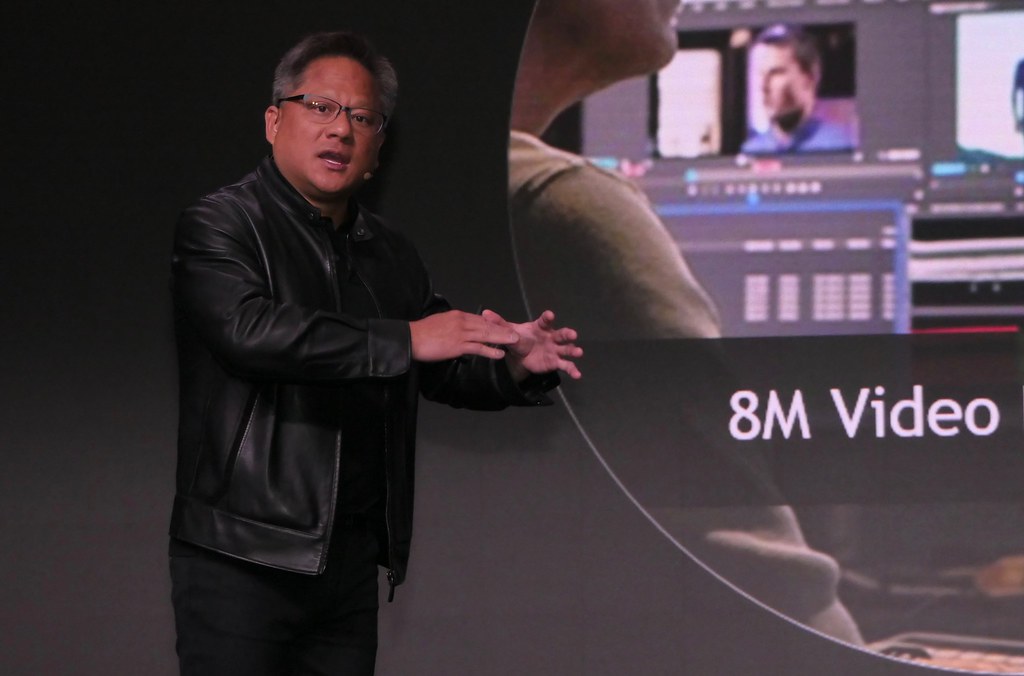
On September 10, 2026, Jensen Huang spoke at the Goldman Sachs Communacopia + Technology conference. During the event, he reiterated Nvidia’s expectation that revenue could grow by 70% year over year next fiscal year.
The comments followed Nvidia’s August earnings announcement, when the company gave an unusually strong outlook for future revenue. The forecast caught the attention of investors because it was substantially ahead of many analyst expectations.
According to TechCrunch’s report on Jensen Huang’s Nvidia 70% growth forecast, Huang said he was confident the company could grow revenue by 70% year over year.
If Nvidia generates $100 billion in revenue during one fiscal year, a 70% increase would mean $170 billion in revenue the following year. This is an illustration of the growth rate, not Nvidia’s actual revenue forecast.
The important point is that Nvidia’s management sees an enormous opportunity ahead. Huang believes the company is positioned to benefit from the expansion of AI across almost every major technology industry.
Why Jensen Huang Is So Bullish on Nvidia AI Growth
The central reason behind Jensen Huang’s Nvidia 70% growth forecast is the increasing demand for artificial intelligence computing.
AI is moving beyond basic chatbots and image generators. Companies are building AI systems that can write software, analyze complex data, automate business operations, and perform tasks that previously required human workers.
These systems need powerful hardware. The more AI models are trained and used, the more computing power is required.
Nvidia is one of the leading suppliers of the GPUs and computing platforms used for these workloads. That gives the company a major opportunity to benefit from AI spending.
AI is becoming a major business investment
Technology companies are investing heavily in data centers and AI infrastructure. Cloud providers, AI laboratories, and large enterprises are all looking for ways to build more capable AI systems.
The demand is not limited to one company or one country. AI development is becoming a global technology race, with businesses competing to build better models and deploy them faster.
This broad demand is one of the reasons Huang believes Nvidia can continue growing at a rapid pace.
AI Agents Could Drive Nvidia’s Next Big Growth Wave
One of the most important parts of Jensen Huang’s Nvidia 70% growth explanation is the rise of AI agents.
Traditional AI applications often respond to a single user request. AI agents, on the other hand, can complete a series of tasks, use software tools, analyze information, and continue working with limited human input.
For example, an AI agent could receive a business request, research the relevant information, create a report, analyze the results, and revise its work. Each step may require additional computing power.
Huang has argued that AI agents could consume significantly more compute than a typical human user. Fortune reported his estimate that agents could require between 15 and 100 times more computing power, depending on the task.

Why AI agents matter for Nvidia revenue
Imagine a company that previously used AI for a few thousand customer questions every day. Now imagine that same company deploying AI agents across sales, customer service, accounting, software development, and internal operations.
The total number of AI interactions could increase dramatically.
If businesses deploy millions of AI agents that work continuously, demand for computing infrastructure could rise sharply. That could create additional opportunities for Nvidia’s GPUs, networking equipment, and software.
Traditional AI
Responds to individual prompts and tasks. Computing demand depends on the model and request.
Agentic AI
Performs multiple steps, uses tools, and works continuously. This can create much greater computing demand.
This is why AI agents are an important part of the Nvidia growth story. The next phase of AI could require far more computing than today’s applications.
Nvidia Is Building More Than AI Chips
Many people still think of Nvidia as a graphics card company. That description is outdated.
Nvidia has transformed itself into a major provider of complete AI computing systems. Its business includes GPUs, networking, CPUs, software, and data-center infrastructure.
The company’s AI platform helps businesses build and operate powerful AI models. Nvidia’s CUDA software ecosystem is also a major part of its competitive advantage.
The company has spent years developing software and hardware that work together. This makes Nvidia important not only to chip buyers, but also to AI developers.
That ecosystem is one of the reasons Jensen Huang believes Nvidia can continue growing despite competition from other chip companies.
Blackwell GPUs and the Future of AI Computing
Nvidia’s Blackwell architecture is a major part of its artificial intelligence strategy. The company is increasingly selling large computing systems instead of individual chips.
At the Goldman Sachs conference, Huang discussed a system combining Grace CPUs with Blackwell GPUs. He said sales of that product were growing 27% month over month.
This shows how Nvidia’s business is changing. Instead of selling a single processor for a few hundred dollars, Nvidia is supplying complete AI computing platforms that can cost millions of dollars.
These systems are designed for demanding AI workloads, including model training and inference.
The scale of these systems helps explain why Nvidia can generate enormous revenue from relatively large customers. A single data-center project can require thousands of GPUs and other components.
Data Centers Are the Foundation of Nvidia’s Growth
AI cannot operate without physical infrastructure. Every AI model needs computing resources, and those resources are typically located in data centers.
Data centers require GPUs, CPUs, networking equipment, memory, cooling systems, and electricity. They also need software that allows businesses to manage and use the hardware efficiently.
Nvidia is positioned across several of these areas, which gives it a broader opportunity than a traditional chip manufacturer.
The company is also expanding its relationships with cloud providers, AI startups, enterprises, and organizations building sovereign AI infrastructure.
This broad network of customers and partners is one of the reasons Huang believes Nvidia has visibility into future demand.

Why Nvidia’s Customers Could Keep Spending on AI
The Nvidia 70% growth forecast depends on customers continuing to invest in AI infrastructure.
These customers include some of the biggest technology companies in the world, as well as smaller AI startups and businesses developing their own applications.
- Cloud providers: Need AI infrastructure to deliver services to millions of customers.
- AI laboratories: Require powerful GPUs to train and run advanced AI models.
- Enterprise businesses: Are adopting AI for automation, software development, analytics, and productivity.
- AI startups: Need computing capacity to build and scale their products.
- Government AI projects: Are investing in domestic computing infrastructure and AI capabilities.
The diversity of these customers matters. Nvidia’s growth does not depend entirely on one company buying its chips. Instead, the company benefits from demand across a wide range of AI applications.
Could Competition Stop Nvidia From Growing 70%?
The biggest challenge to Jensen Huang’s Nvidia 70% growth forecast is competition.
Major cloud companies are developing their own AI chips. Other semiconductor companies are also working to compete with Nvidia in the AI accelerator market.
Companies such as AMD, Google, Amazon, and other chip designers are developing alternative hardware for AI workloads.
Competition could eventually pressure Nvidia’s pricing, margins, and market share.
However, Nvidia’s software ecosystem and its position across the AI supply chain remain important advantages. Customers often need a complete platform, not simply a chip.
The question for investors is whether Nvidia can maintain that advantage while the AI chip market becomes more competitive.
Supply Chain Challenges Could Affect Nvidia’s 70% Growth
Even if AI demand remains strong, Nvidia must still manufacture and deliver its products.
Advanced AI computing systems require complex components, including high-performance memory, advanced packaging, networking equipment, and manufacturing capacity.
Huang acknowledged that Nvidia’s supply chain is under pressure. He suggested that demand could be even higher than the company’s 70% revenue-growth outlook, but supply limitations affect how much Nvidia can deliver.
This is an important distinction. Strong demand does not automatically become revenue unless Nvidia can produce and ship enough systems.
The company is working with suppliers and partners to expand capacity, but manufacturing constraints remain a risk.
What About Nvidia’s AI Investments and Circular Financing?
Another issue attracting attention is Nvidia’s investments in AI companies that may also become customers.
Some investors have questioned whether these arrangements could create financial dependencies between Nvidia and the AI businesses buying its hardware.
Huang has defended the strategy, arguing that Nvidia invests in companies with real contracts and commercial demand.
The debate matters because Nvidia’s growth is increasingly connected to the wider AI ecosystem. If AI companies receive funding and use that money to buy computing infrastructure, investors may want to understand how sustainable that spending is.
The long-term success of Nvidia’s strategy will depend on whether AI businesses generate enough revenue and productivity gains to justify continued investment.
What Does Jensen Huang’s Nvidia 70% Growth Forecast Mean for Investors?
The forecast is a powerful signal that Nvidia’s management sees continuing demand for AI infrastructure.
However, investors should not assume that a 70% revenue-growth forecast means Nvidia stock will also rise 70%.
Stock prices depend on many factors, including earnings, valuation, competition, market expectations, interest rates, and investor sentiment.
A company can grow revenue rapidly while its stock price performs poorly if the market has already priced in that growth.
For Nvidia investors, the important questions are:
- Can Nvidia achieve the projected 70% revenue growth?
- Will AI infrastructure spending remain strong?
- Can Nvidia maintain its competitive advantage?
- Will rival AI chips gain market share?
- Can customers generate strong returns from AI investments?
- Is Nvidia stock priced reasonably relative to future earnings?
The Bigger Picture: AI Could Still Be in Its Early Stages
Jensen Huang believes artificial intelligence is becoming a foundational technology for the global economy.
Just as cloud computing transformed software and the internet changed how businesses operate, AI could reshape industries ranging from finance and healthcare to manufacturing and entertainment.
Nvidia is positioned to supply much of the infrastructure behind that transformation.
The company benefits when businesses train more AI models, deploy more AI applications, and build more advanced computing systems.
That is the bigger reason behind the Jensen Huang Nvidia 70% growth outlook.
Still, the future is not guaranteed. AI adoption could slow, competition could intensify, and businesses may become more selective about their spending.
The 70% figure should therefore be viewed as a bold management forecast rather than a promise.
Final Verdict: Can Nvidia Really Grow 70% Next Year?
Jensen Huang’s Nvidia 70% growth forecast highlights the extraordinary demand surrounding artificial intelligence.
Nvidia is no longer simply a company selling graphics processors. It is a major provider of the hardware, software, networking, and computing systems that power the AI economy.
The rise of AI agents, larger models, and global data-center construction could create more demand for Nvidia’s products.
The company’s strong ecosystem and customer relationships are important reasons why Huang remains optimistic.
But competition, supply constraints, customer economics, and valuation remain significant risks.
For now, the Nvidia 70% growth forecast is one of the most important AI business stories to watch. If Nvidia delivers on its outlook, it would demonstrate that AI infrastructure demand is still expanding at an extraordinary pace.
If the company falls short, investors may begin questioning whether the AI spending boom can continue at its current scale.
Either way, Nvidia’s next financial results will be closely watched by the technology industry and the stock market.
Nvidia’s future growth depends on AI becoming more useful, more widespread, and more computationally demanding. Jensen Huang’s 70% revenue-growth outlook is ambitious, but the AI infrastructure market remains one of the most important technology opportunities in the world.
Explore More AI News on WovelAI
Want to learn more about the latest artificial intelligence developments? Explore these WovelAI categories for more technology stories, AI guides, and industry updates.
- AI News — The latest artificial intelligence news and developments.
- AI Trends — Discover the biggest trends shaping the future of AI.
- AI Guides — Learn how AI tools and technologies work.
- AI Tools — Explore useful AI tools and software.
- AI Business — Discover how businesses are using artificial intelligence.
Sources and Further Reading
This article is for informational purposes only and does not constitute financial advice or a recommendation to buy or sell Nvidia stock. Revenue forecasts are subject to change. Image URLs should be checked for availability and licensing before publication.






What do you think?
Have a thought, question or useful perspective? Leave a comment below.