
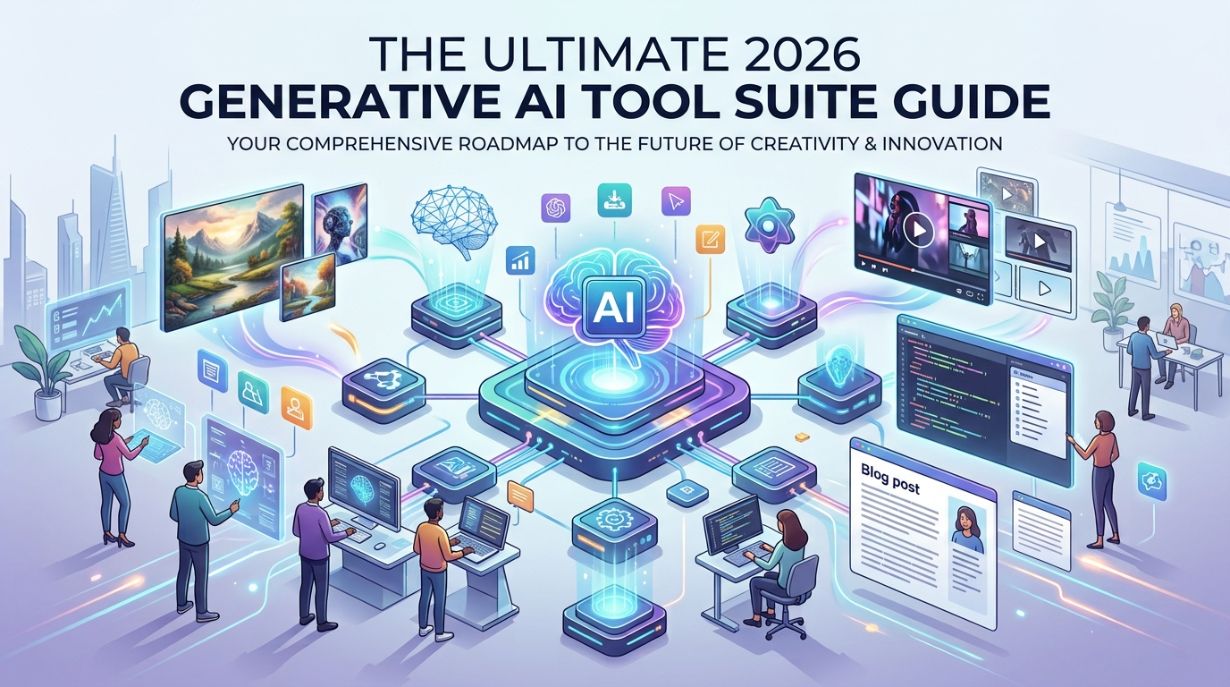
You are reading a WovelAI editorial — designed to make complex ideas, technology and developments easier to understand.
Artificial intelligence has ceased to be a speculative technology of tomorrow—it is the foundational engine driving modern digital work. Whether you are an enterprise executive optimizing multi-channel content, a software engineer accelerating code delivery, or a solo creator building rich visual narratives, selecting the best AI tools tailored to your precise workflow is no longer optional; it is a core competitive advantage.
As software solutions proliferate across every creative and technical discipline, navigating this expansive landscape requires clarity. In this definitive 2026 guide, we unpack the top generative AI software, productivity suites, automated creation engines, and developer frameworks designed to maximize human potential. For a deeper breakdown of emerging platforms, explore our continuous technical breakdowns on WovelAI Discover.
- The Leading Generative AI Text & Writing Assistants
- Next-Generation AI Image & Visual Art Generators
- Cutting-Edge AI Video Creation & Synthesis Engines
- Premier AI Audio, Voice, & Music Generators
- Game-Changing AI Coding Tools for Developers
- Workflow Automation & Agentic AI Systems
- Comparative AI Tool Matrix
- Strategic Framework: How to Select Your AI Stack
1. Premier Generative AI Text & Writing Assistants

Natural Language Processing (NLP) models have evolved far beyond basic autocomplete functions. Modern text-based AI models possess deep contextual reasoning, complex problem-solving abilities, and advanced multimodal synthesis capabilities. Below are the standout text generation tools defining editorial efficiency today.
ChatGPT (GPT-4o & Beyond by OpenAI)
OpenAI’s flagship assistant remains a cornerstone of enterprise and individual productivity. Offering multi-modal interaction across text, vision, and real-time voice, OpenAI’s ChatGPT excels at everything from drafting policy documents to analyzing complex visual datasets.
Key Strengths
- Industry-leading contextual comprehension
- Massive ecosystem of custom GPTs and integrations
- Advanced real-time web access & code interpreter
Considerations
- Requires tier subscriptions for maximum speed and models
- Can occasionally display verbose phrasing
Claude 3.5 Sonnet & Opus (by Anthropic)
Engineered with a strong emphasis on constitutional AI and safety, Anthropic’s Claude has captured significant market share among developers and professional writers. Its massive context window allows users to upload entire books or complex code repositories for comprehensive analysis without performance degradation.
Key Strengths
- Exceptional, natural human tone in written outputs
- Industry-best performance in code generation & debugging
- Massive context window (200k+ tokens)
Considerations
- No native image generation functionality
- Slightly more restrictive rate limits on free tiers
For creators interested in experimenting with customized prompt parameters and creative language generation directly inside interactive sandboxes, check out the live generation suites at WovelAI Play.
2. Next-Generation AI Image & Visual Art Generators

Visual AI has shifted from low-fidelity art generation to production-grade asset creation suitable for major advertising campaigns, game development pipelines, and UI prototyping.
Midjourney v6
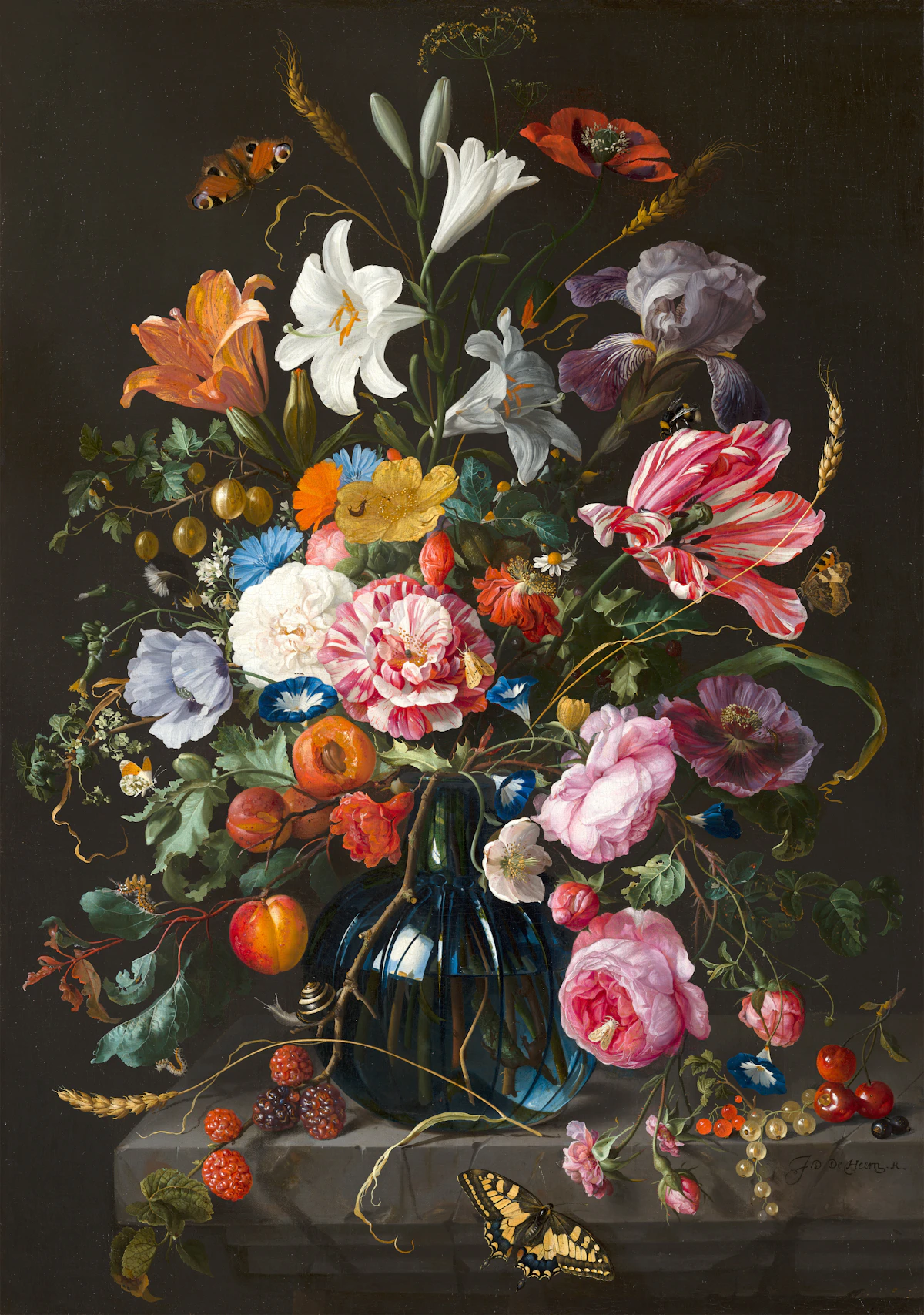
Midjourney continues to set the standard for photorealism, artistic stylization, and prompt responsiveness. Operating primarily through Discord and its expanded web application, Midjourney v6 delivers unparalleled control over lighting, camera angles, textures, and fine typography rendering within visual frames.
DALL-E 3 (OpenAI)

Deeply integrated within ChatGPT and available via robust API endpoints, DALL-E 3 excels in strict prompt adherence. Users can describe hyper-specific scenarios, textual elements within images, or abstract vector illustrations, receiving precise visual interpretations with minimal prompt engineering tweaking required.
Adobe Firefly

Designed explicitly for creative professionals and corporate environments, Adobe Firefly stands out due to its training on commercially safe stock imagery. Seamlessly integrated into Photoshop, Illustrator, and Premiere Pro, Firefly empowers designers to execute Generative Fill and Expand with precise layer-level controls.
3. Premier AI Video Creation & Synthesis Engines

Video production remains one of the most resource-intensive creative endeavors. AI video generation engines are dramatically compressing post-production cycles, enabling instant B-roll generation, realistic avatars, and script-to-video automation.
- Runway Gen-2 & Gen-3 Alpha: Known as the industry leader in cinematic text-to-video and image-to-video motion synthesis. Runway offers filmmakers granular controls over camera movement, velocity, and style transfer.
- Luma Dream Machine: A high-fidelity, high-speed video model capable of generating physically consistent 3D camera sweeps and realistic character interactions from simple text prompts.
- HeyGen & Synthesia: Enterprise standards for avatar-based video production. Perfect for corporate training, multi-lingual localization, and sales communications without requiring physical studio equipment.
Curious about futuristic text-to-3D, spatial visual tools, and unreleased experimental video models? Visit the conceptual research section at WovelAI Lab to see where visual generation is heading next.
4. Advanced AI Audio, Voice, & Music Generators
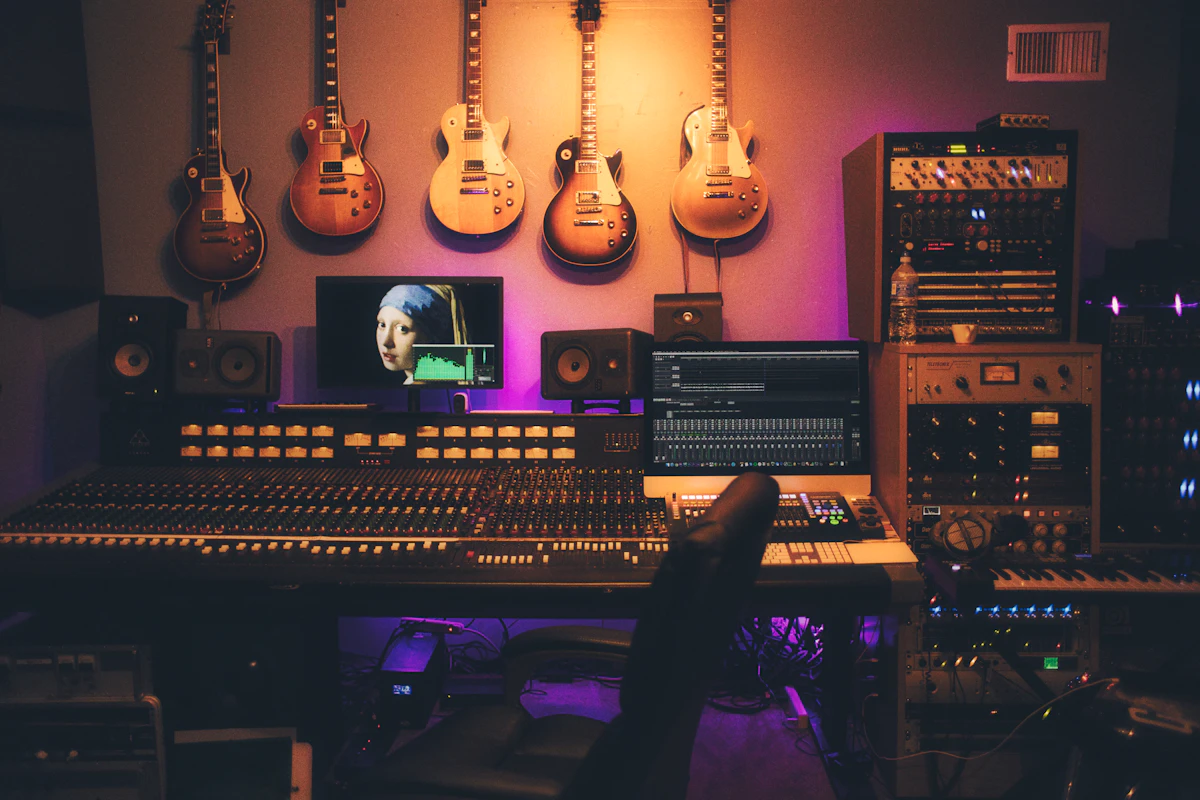
Acoustic artificial intelligence has advanced rapidly. Modern audio engines generate synthetic human speech practically indistinguishable from natural recordings, complete with dynamic breath work, emotional cadence, and local dialect nuances.
ElevenLabs
ElevenLabs offers market-leading text-to-speech, voice cloning, and AI dubbing services across over 29 languages. Content creators and game studios utilize ElevenLabs to generate voice-overs with subtle emotional inflections and custom voice profiles.
Suno AI & Udio
Suno AI and Udio have disrupted music production by turning simple textual descriptions into full studio-quality songs—complete with arranged instrumentation, original melodies, and synthesized vocals across virtually any musical genre.
5. Essential AI Coding & Developer Assistants

Software engineering has experienced one of the most profound accelerations driven by LLMs. Developers who utilize intelligent code suggestion, automated testing, and agentic refactoring report speed increases between 30% and 55% in daily output.
Cursor IDE

Built as a fork of VS Code, Cursor is an AI-first code editor designed from the ground up to integrate large language models directly into your repository context. It allows developers to edit code with natural language prompts, refactor entire multi-file structures, and debug errors automatically.
GitHub Copilot

Powered by OpenAI models and trained on billions of lines of code, GitHub Copilot remains the default developer companion across popular IDEs, providing autocomplete suggestions, inline documentation, and real-time security scanning.
6. Workflow Automation & Autonomous AI Agents

Beyond single-purpose generation tools, the real magic of enterprise productivity happens when AI systems orchestrate complex multi-step workflows autonomously.
Unlike standard chatbots that wait for user inputs, autonomous AI agents are assigned a high-level goal (e.g., “Research top 5 competitors, compile a summary table, and email it to the team”). The agent breaks down the tasks, searches the web, executes code, formats files, and delivers completed outputs independently.
Platforms like Zapier Central and Make.com allow non-technical teams to wire intelligent language models directly into enterprise databases, CRM tools like HubSpot, and internal communication platforms such as Slack or Microsoft Teams.
7. Comprehensive AI Tool Comparison Matrix

Below is a quick reference table breaking down the top AI software suites across performance categories, primary use cases, and ideal user profiles:
| Tool Name | Primary Domain | Key Strength | Best For |
|---|---|---|---|
| ChatGPT (GPT-4o) | Text / Vision / Multimodal | Versatile reasoning & general intelligence | Knowledge workers & general public |
| Claude 3.5 Sonnet | Text / Coding / Analysis | Human-like nuance & massive context | Writers, researchers, developers |
| Midjourney v6 | Visual Art / Photography | Unmatched photorealism & lighting | Graphic designers & art directors |
| ElevenLabs | Voice / Speech Synthesis | Hyper-realistic voice replication | Podcasters, video editors, localization |
| Cursor IDE | Software Engineering | Repository-wide contextual coding | Full-stack developers & software engineers |
| Runway Gen-3 | Video Generation | Cinematic movement and realism | Filmmakers, VFX artists, agency teams |
8. Buyer’s Framework: How to Select the Ideal AI Stack

Selecting the best artificial intelligence tools requires a balanced strategy. Adopting too many single-feature apps can result in subscription fatigue, fragmented data workflows, and security vulnerabilities. Follow this strategic framework when evaluating software:
- Assess Security and Data Privacy: Ensure that any AI platform handling customer or enterprise proprietary data guarantees your data will not be used to train their public base models.
- Prioritize Contextual Integration: The best tools are those that sit directly inside your existing workspace (e.g., extensions, API connectivity, native plugin support).
- Evaluate Latency vs. Output Quality: High-precision models (like Claude Opus) are superior for complex tasks, while smaller distilled models are ideal for instant high-frequency tasks.
- Leverage Curated Ecosystems: Stay informed through specialized news and analysis portals like WovelAI Discover to test tools before making long-term enterprise commitments.
9. Conclusion: Building Your Future-Proof AI Toolkit

The AI tool landscape in 2026 is defined by rapid convergence: text generators can build full applications, image models can render physically consistent scenes, and code engines can deploy autonomous pipelines. By strategically combining top-tier platforms—such as Claude for technical writing, Midjourney for visual storytelling, ElevenLabs for voice, and Cursor for code—you unlock compounding efficiency gains.
Stay ahead of rapidly emerging tools and explore live software interactive breakdowns across the three core branches of the AI software ecosystem: learn at Discover, create inside Play, and preview the future at Lab.




What do you think?
Have a thought, question or useful perspective? Leave a comment below.